
Home › Forums › Lifestyle & Relationships › Fashion & Beauty › TikTok Sub-Saharan Awards: Day Two — Exploring Johannesburg and Soweto’s rich history
- This topic is empty.
-
AuthorPosts
-
December 7, 2025 at 3:12 am #39594
tkc
Keymaster::
From the gleaming towers of metropolitan Joburg to the profound history of Soweto, day two offered a masterclass in contrasts, community, and the enduring power of storytelling
If day one was Johannesburg’s warm embrace, a gentle introduction of sunrise, good food, and enchanting first impressions, then day two was the city pulling back the curtain entirely. This was the day we would move beyond tourist wonder and into something deeper: understanding. The itinerary promised comprehensiveness, and Johannesburg, it turned out, takes that promise seriously. By the time the sun set, I would understand why this city commands such fierce loyalty from those who call it home, and such profound respect from those who study its complex, gold-laced history.
Staying stylish while exploring
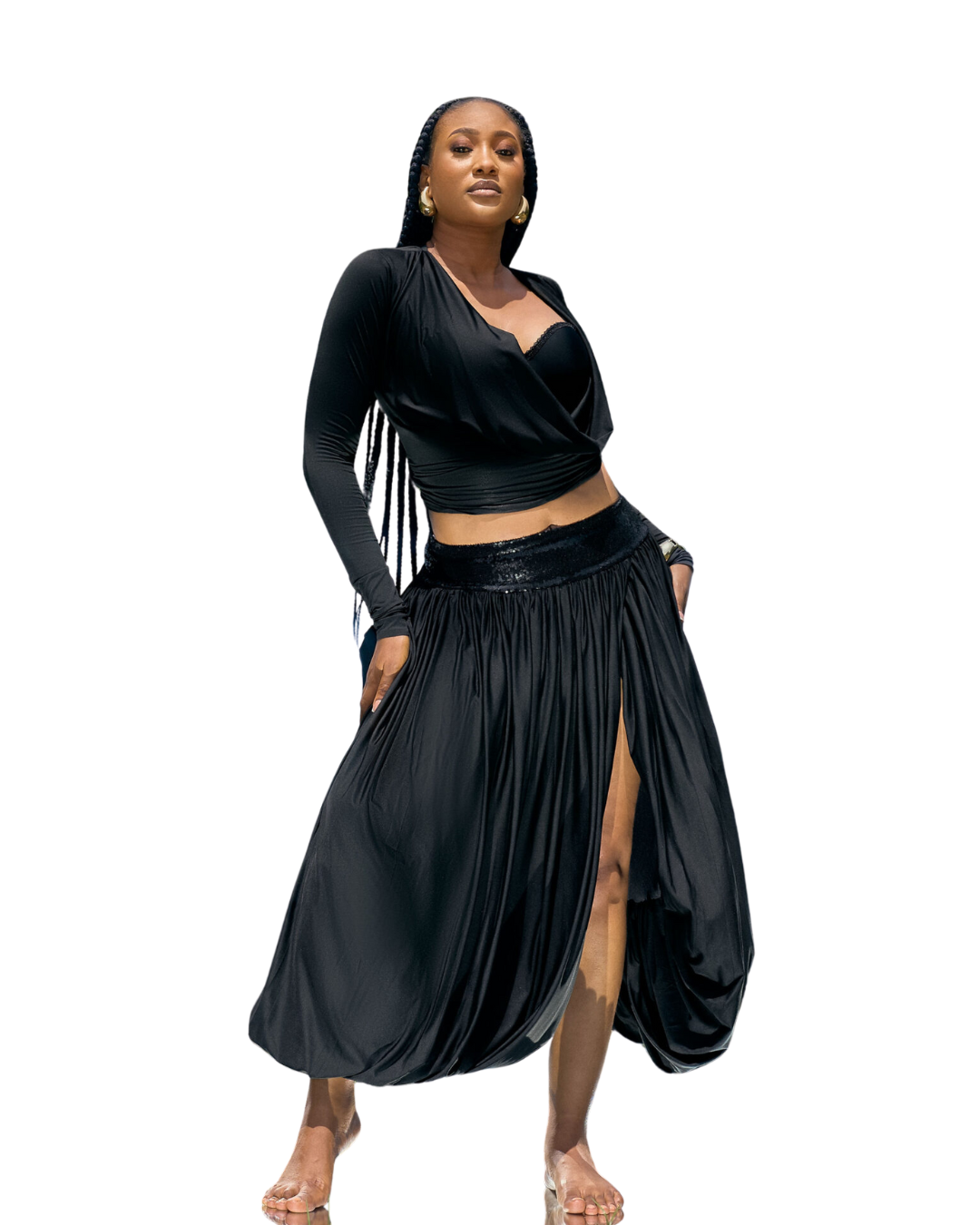
For a day that promised comprehensive exploration, I needed an outfit that could transition seamlessly from morning meetings to afternoon touring. I chose Zurik’s Bubble Set in black — a perfectly structured co-ord that balanced sophistication with comfort. The silhouette was clean and modern, allowing for easy movement throughout what would prove to be an exceptionally full day.


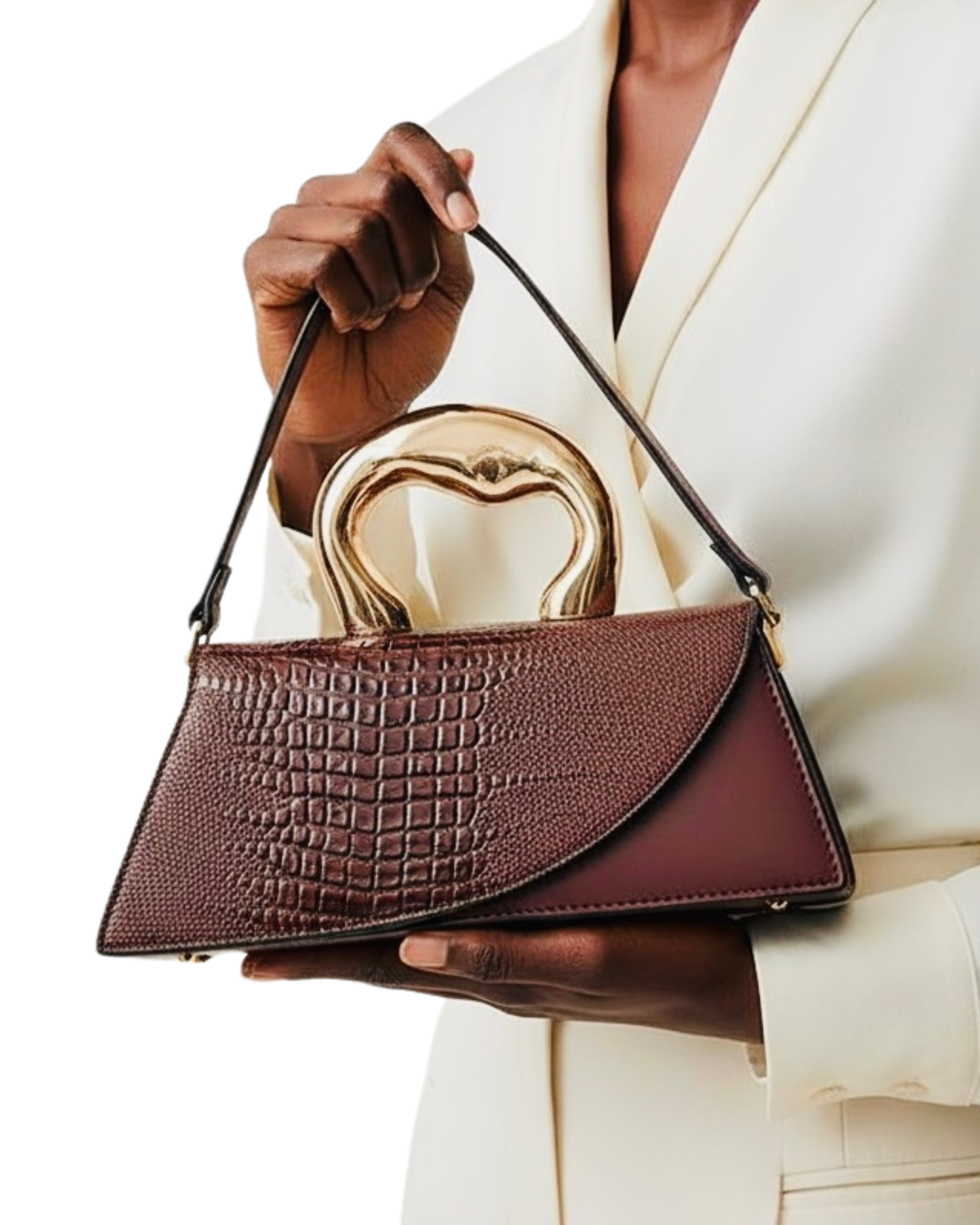
I paired it with my trusted Gbemisoke Goldie Bag in “brown”, the crocodile-design leather catching the morning light beautifully. But the real stars of this outfit were my handmade slippers from a local artisan — a spontaneous purchase that felt like carrying a piece of Lagos’s creative spirit with me. The combination was effortless, chic, and exactly right. I looked great, and more importantly, I felt ready for whatever the day would bring.
Bubble Set in “Black”
₦250,000
Zurik
Goldie Bag in “Brown”
₦45,000
Gbemisoke
Coffee, Colleagues, and the Convergence of Storytellers
The official itinerary began at Father Coffee in Rosebank Mall, where the TikTok South Africa team orchestrated our first proper gathering. Journalists from Kenya joined our Nigerian contingent, and the energy was immediately electric. There’s something uniquely wonderful about meeting fellow storytellers in person after existing primarily in digital spaces — the shared language of narrative, the instant recognition of kindred creative spirits.

Father Coffee provided the perfect backdrop for these introductions. The aroma of expertly brewed coffee mingled with animated conversations about content strategies, cultural nuances, and the peculiar magic of social media storytelling. The TikTok team moved through the space with practiced ease, ensuring connections were made, laughter was abundant, and everyone felt genuinely welcomed. It was the kind of organic networking that doesn’t feel like work — just people passionate about their craft, discovering common ground over excellent coffee.

The Red Bus Tour: Metropolitan Johannesburg Unfolds
After our convivial morning, we boarded a red tour bus that would serve as our mobile classroom for understanding Johannesburg’s magnificent complexity. What unfolded was nothing short of revelatory.
A City Built on Gold
The tour guide’s voice carried the weight of history as we navigated through the city. “Johannesburg,” she explained, “is the richest city in South Africa, though gold mining is no longer its main industry.” The irony wasn’t lost on any of us—this metropolis, born from the 1886 discovery of gold on the Witwatersrand ridge, has evolved far beyond its mining origins.
The discovery itself was almost accidental, she continued. An Australian prospector named George Harrison stumbled upon a gold-bearing reef on the farm Langlaagte. Within years, what had been farmland transformed into the largest gold-mining complex in the world. The Witwatersrand Gold Rush brought fortune seekers from across the globe, and Johannesburg was born — not gradually, but explosively.

Processed with VSCO with fa1 preset 


Today, Gauteng — the province whose name literally means “place of gold” in Sotho — is South Africa’s smallest province by land area but its richest by far. Housing just over 1.5% of South Africa’s total land, Gauteng generates approximately one-third of the nation’s GDP and an astonishing 10% of the entire African continent’s economic output. The numbers are staggering, and they’re written into every gleaming building we passed.
The Metropolitan Sprawl
As our bus wound through the city, the guide painted a picture of a truly vast urban landscape. Metropolitan Johannesburg stretches impressively from Soweto in the southwest all the way to Pretoria in the north — a continuous urban corridor that speaks to the region’s explosive growth and economic magnetism.

Processed with VSCO with fa1 preset 


The infrastructure impressed me immediately. Wide, well-maintained roads accommodated the inevitable traffic — yes, there’s traffic, but nothing compared to Lagos’s legendary gridlock. “Work-life balance here is taken seriously,” our guide mentioned with evident pride. The rhythm of the city reflected this: people moved with purpose but not panic, and the green spaces we’d noticed yesterday were clearly integral to urban planning, not afterthoughts.
Recreation, she explained, centers heavily around sport. Soccer commands passionate loyalty, rugby draws fierce tribal allegiances, and cricket maintains its colonial-era following. These aren’t just hobbies — they’re woven into the social fabric, weekend traditions that bring communities together across the city’s diverse neighborhoods.
Elite Enclaves and Historic Landmarks
The tour took us through neighborhoods that could only be described as palatial. Elite areas showcased architectural ambition in every direction — sprawling estates with manicured gardens, security that spoke to both wealth and the city’s complex relationship with safety, and a level of opulence that felt almost surreal.
We passed historic schools whose names carried weight, institutions that had educated generations of South Africa’s leaders and shaped the nation’s intellectual trajectory. The guide’s narration never shied from complexity, acknowledging both achievement and inequality, progress and persistent challenges.

Processed with VSCO with fa1 preset 


Then came the showrooms. Aston Martin, Rolls-Royce, Bentley — gleaming temples to automotive luxury that serve as very visible markers of Gauteng’s concentrated wealth. Chidirim and I exchanged glances, uplifted by the display of affluence.
But the most meaningful stop was Nelson Mandela’s former residence. The house, our guide explained, was deliberately designed for “inquisitivity” — an architectural choice that reflected Mandela’s belief in transparency and accessibility. Even in his private space, he wanted to remain connected to his community, visible and accountable. Standing before it, I felt the profound weight of that philosophy.
In Soweto, history lives in every corner
The transition from metropolitan Johannesburg to Soweto was stark and immediate. Crossing into the South Western Townships — yes, Soweto is an acronym — felt like entering a completely different city. Honestly, I experienced the same wonder I’d felt learning that Ikeja stood for Ikorodu and Epe Joint Administration. Soweto and Johannesburg are separated by mere kilometers and a mountain range that serves as both physical and symbolic divider.


The geography of segregation
Our guide explained the deliberate design of Soweto’s location. The mountain wasn’t just a natural boundary; it was weaponised during apartheid to create physical separation between white Johannesburg and Black townships. What began as mining compounds for Black labourers evolved into sprawling townships where millions were relegated to live, deliberately kept separate from the wealth they helped create.
The architecture told the story immediately. Smaller houses clustered together, communal living spaces that spoke to both scarcity and the powerful bonds formed in resistance. Community hostels — originally built to house migrant workers — still stand as reminders of the systematic exploitation that built Johannesburg’s gold empire on the backs of Black labour.
Walking through living history
Soweto isn’t a museum, though it contains many. It’s a living, breathing community where history isn’t preserved behind glass but continues in the daily lives of its residents. We visited heritage sites that have become pilgrimage destinations for those seeking to understand South Africa’s journey.

Processed with VSCO with fa1 preset 


Mandela’s house still bears bullet holes from the violence that surrounded the struggle against apartheid. Standing before those walls, I couldn’t help but touch them gently, feeling the rough texture of history made tangible. This wasn’t abstract; this was real violence, real danger, real courage lived out in these very streets.
The Hector Pieterson Museum proved even more emotionally overwhelming. Dedicated to the 12-year-old boy who became the iconic face of the 1976 Soweto Uprising, the museum doesn’t allow you to remain distant. Through photographs, testimonies, and carefully curated exhibits, you’re forced to confront the brutal reality of a government that shot children for protesting the imposition of Afrikaans as the medium of instruction in their schools.

Hector’s sister, Antoinette Sithole, was there when he was shot. The famous photograph of his dying body being carried by another student, with Antoinette running alongside, became one of apartheid’s most powerful indictments. The museum ensures you understand: these weren’t just political casualties. They were children. They had names, families, and dreams.
Lunch at Sakhumzi
After the emotional weight of the museum, lunch at Sakhumzi Restaurant offered necessary reprieve and nourishment — both physical and spiritual. The restaurant, a Soweto institution, served food that was genuinely, exceptionally delicious. This wasn’t cuisine modified for tourist palates; this was authentic, proudly South African cooking.


We feasted on perfectly seasoned dishes that showcased the country’s diverse culinary heritage — pap and chakalaka, tender braised meats, rich stews, and vegetables prepared with the kind of care that only comes from generational knowledge. Every bite carried flavours that spoke to tradition, resilience, and the simple joy of sharing a meal.

Family reunions and Nigerian food in South Africa
The beaded mesh dress makes its debut
For dinner, I changed into Zurik’s Beaded Mesh Dress in Dawn Print — an absolutely stunning piece that deserved its moment. The dress featured intricate beadwork across delicate mesh, creating a beautiful interplay between coverage and revelation. The dawn print incorporated soft, gradient colors that caught light beautifully, and the silhouette was effortlessly elegant.
I paired it with white mules from Gbemisoke, keeping the accessories minimal to let the dress speak for itself. The look felt appropriately dressy for what would be a meaningful evening — beautiful without trying too hard, elegant without being overly formal.

Processed with VSCO with fa1 preset 
Goldie Bag in “Brown”
₦45,000
Gbemisoke
Mules in “White”
₦33,000
Gbemisoke
Auntie’s house: diaspora and homecoming
Chidirim and I were incredibly fortunate to connect with an aunt who had migrated from Nigeria before Chidirim was born, establishing her life in South Africa since the 1990s. The invitation to her home carried the weight of diaspora connection — that particular joy of finding family in unexpected places, of realising that home can exist in multiple locations simultaneously.

Processed with VSCO with al3 preset Her home was lovely and welcoming, decorated with that careful blend of Nigerian heritage and South African influence that marks diaspora spaces. You could see Nigeria in the textiles, the family photographs, certain decorative choices. But South Africa was equally present — in the furniture, the art on the walls, the way the space was organised.
The warmth of her welcome reminded me why these connections matter so profoundly. In a foreign country, finding someone who speaks your mother tongue, who understands your cultural references, who can effortlessly code-switch between Nigerian and South African contexts — it’s grounding in ways that are difficult to articulate.
With Hombaze, Nigeria comes to Da Vinci Mall
Our dinner destination was Hombaze, a Nigerian restaurant at Da Vinci Mall, and I was genuinely curious. How would Nigerian cuisine translate in South Africa? Would it maintain its authenticity, or would it be adapted, compromised, made palatable for different tastes?

Processed with VSCO with fa1 preset I needn’t have worried. Hombaze delivered. The food was unmistakably Nigerian — the proper spice levels, the correct texture of the swallow, the rich depth of flavour in the soups and stews. Sitting there, eating groundnut soup, pounded yam, and plantain thousands of kilometers from Lagos, I felt that peculiar mixture of homesickness and homecoming.
The restaurant was filled with other Nigerians, other members of the diaspora, and the mix of accents — Nigerian English, South African English, the occasional Zulu or Xhosa phrase — created a linguistic symphony that felt like the soundtrack to contemporary African identity. We’re everywhere, I thought. We’re building communities, opening restaurants, maintaining traditions while embracing new contexts.
The evening stretched beautifully, filled with stories about migration, adaptation, the challenges of building a life far from where you started. Chidirim’s aunt spoke candidly about the ‘90s, about arriving in South Africa during a time of immense transition for both countries — Nigeria navigating military rule, South Africa emerging from apartheid. Her stories carried wisdom earned through decades of navigating two complex national identities.
Day Two, complete: contrasts and connections
As we finally returned to the Southern Sun, exhausted but exhilarated, I reflected on the sheer breadth of what day two had offered. We’d moved from the gleaming wealth of metropolitan Johannesburg to the profound historical weight of Soweto. We’d learned about gold mining’s explosive impact and its eventual diminishment. We’d stood before bullet holes and museum exhibits that refused to let history remain abstract.
We’d eaten incredibly well — from Sakhumzi’s authentic South African cuisine to Hombaze’s perfect Nigerian dishes. We’d connected with fellow journalists, with the TikTok team, with family members navigating diaspora identity.
Johannesburg was revealing itself as a city of stunning contrasts: wealth and poverty existing in uncomfortable proximity, beauty and brutality written into the same landscape, joy and sorrow occupying the same spaces. It’s a city that refuses easy narratives, that demands you hold complexity without resolution.
Tomorrow promises the main event — the TikTok Sub-Saharan Awards ceremony itself. But today, day two, offered something perhaps even more valuable: context. We’re not just here for a glamorous event. We’re here in a city with profound stories to tell, in a country still grappling with its history while building its future.
The bar TikTok Africa set on day one? They’ve somehow managed to raise it even higher. I’m deeply grateful, thoroughly exhausted, and genuinely excited for what comes next.
React to this post!Love0Kisses0Haha0Star0Weary0The post TikTok Sub-Saharan Awards: Day Two — Exploring Johannesburg and Soweto’s rich history appeared first on Marie Claire Nigeria.
-
AuthorPosts


- You must be logged in to reply to this topic.
- Click to share on Facebook (Opens in new window) Facebook
- Click to share on X (Opens in new window) X
- Click to print (Opens in new window) Print
- Click to email a link to a friend (Opens in new window) Email
- Click to share on WhatsApp (Opens in new window) WhatsApp
- More
- Click to share on Pinterest (Opens in new window) Pinterest
- Click to share on LinkedIn (Opens in new window) LinkedIn
- Click to share on Reddit (Opens in new window) Reddit
- Click to share on Tumblr (Opens in new window) Tumblr
- Click to share on Pocket (Opens in new window) Pocket
- Click to share on Mastodon (Opens in new window) Mastodon
- Click to share on Nextdoor (Opens in new window) Nextdoor
- Click to share on Bluesky (Opens in new window) Bluesky


